
Startup India Registration
India’s startup ecosystem has grown rapidly, with thousands of new businesses launching every year across technology, services, manufacturing, and innovation-driven sectors. To support and encourage this growth, the Government of India introduced the Startup India Initiative, which provides recognition and benefits to eligible startups.
Startup India Registration is the first legal step for startups to access government incentives such as tax exemptions, funding support, easier compliance, and faster approvals. When done correctly, this registration strengthens a startup’s legal standing and helps it scale faster with confidence.
What is Startup India Registration?
Startup India Registration is the process of obtaining official recognition as a startup under the Startup India Initiative, managed by the Department for Promotion of Industry and Internal Trade (DPIIT). Once recognised, a startup becomes eligible for various government benefits and schemes.
This recognition confirms that the business is innovation-driven, scalable, and aligned with the objectives of employment generation and economic growth. Startup India Registration does not create a new business entity; instead, it recognises an already incorporated entity as a startup under government rules.
Who is Eligible for Startup India Registration?
To qualify for Startup India Registration, a business must meet specific eligibility criteria prescribed by DPIIT. The entity must be incorporated as a Private Limited Company, Limited Liability Partnership (LLP), or Registered Partnership Firm.
The startup should be incorporated within the prescribed time limit and must be working towards innovation, development, or improvement of products, processes, or services. Businesses formed by splitting or reconstruction of existing entities are not eligible.
Eligibility is evaluated based on business activity, scalability, and originality.
Documents Required for Startup India Registration
Accurate and complete documentation is essential for smooth approval by the Department for Promotion of Industry and Internal Trade (DPIIT). These documents help authorities evaluate the startup’s legal status, business model, and innovation potential.
- Certificate of Incorporation or Registration
This document proves that the startup is legally registered as a Private Limited Company, LLP, or Partnership Firm. It confirms the date of incorporation and the legal existence of the entity. - PAN Card of the Entity
PAN card of the business entity is required for tax identification and linking the startup with government records and compliance systems. - Details of Directors or Partners
Information related to directors or partners, including names and designations, is required to verify management and ownership structure. - Business Description and Innovation Details
A clear explanation of the startup’s business model, innovation, and scalability is required. This helps DPIIT assess whether the startup meets eligibility criteria under the Startup India initiative. - Pitch Deck or Brief Business Summary
A pitch deck or concise business summary provides an overview of the product or service, target market, and growth potential, strengthening the application. - Authorisation Letter (If Applicable)
If the application is filed by an authorised representative, an authorisation letter is required to validate the authority to act on behalf of the startup.
Proper documentation reduces the risk of rejection, ensures faster processing, and improves the chances of successful Startup India recognition.
Step-by-Step Registration Process
- Create an Account on the Startup India Portal
The registration process begins by creating an account on the official Startup India portal. Basic details of the business entity, such as name, incorporation type, and contact information, must be provided to initiate the application. - Submit Incorporation and Entity Details
After account creation, the startup is required to submit incorporation details, including the date of incorporation, legal structure, and registered office information. These details help DPIIT verify the legal status of the startup. - Provide Business Model and Innovation Description
A detailed description of the startup’s business model, innovation, and scalability must be submitted. This information is used to assess whether the startup meets the eligibility criteria under the Startup India initiative. - Upload Supporting Documents
All required documents, such as the Certificate of Incorporation, PAN card, and business summary or pitch deck, must be uploaded accurately. Proper documentation helps prevent delays or rejection. - Complete Self-Certification
The startup must complete self-certification as per prescribed conditions, confirming compliance with Startup India eligibility norms and declarations under applicable laws. - Review and Approval by DPIIT
The Department for Promotion of Industry and Internal Trade (DPIIT) reviews the application and documents. If all conditions are satisfied, the application is approved. - Issue of Startup Recognition Certificate
Upon successful approval, DPIIT issues the Startup Recognition Certificate, officially recognising the entity as a startup under the Startup India initiative.
Post-Registration Requirements
After obtaining Startup India recognition, startups must ensure ongoing compliance with applicable laws. This includes filing annual returns, maintaining statutory records, and complying with tax regulations.
If the startup applies for tax benefits or funding schemes, additional documentation and approvals may be required. Maintaining accurate records helps retain recognition status and benefits.
Time and Cost Required
Startup India Registration is generally completed within 2 to 5 working days, provided all details and documents are accurate. Delays may occur if the business description or documents require clarification.
The registration process itself does not involve heavy government fees. Professional charges may apply if expert assistance is taken to ensure accuracy and compliance.
Advantages and Disadvantages of Startup India Registration
Advantages
Startup India Registration provides access to tax exemptions, funding opportunities, government tenders, and easier compliance. It improves credibility with investors and financial institutions and supports faster growth.
Disadvantages
Not all businesses qualify for registration, as eligibility depends on innovation and scalability. Certain benefits require additional approvals and compliance, which may involve time and documentation.
Checklist for Startup India Registration
Before applying, ensure the following checklist is complete:
- Eligible business entity incorporated
- Business innovation and scalability clearly defined
- Required documents prepared and verified
- Accurate business description drafted
- Authorised signatory details ready
A complete checklist helps avoid rejection or delays.
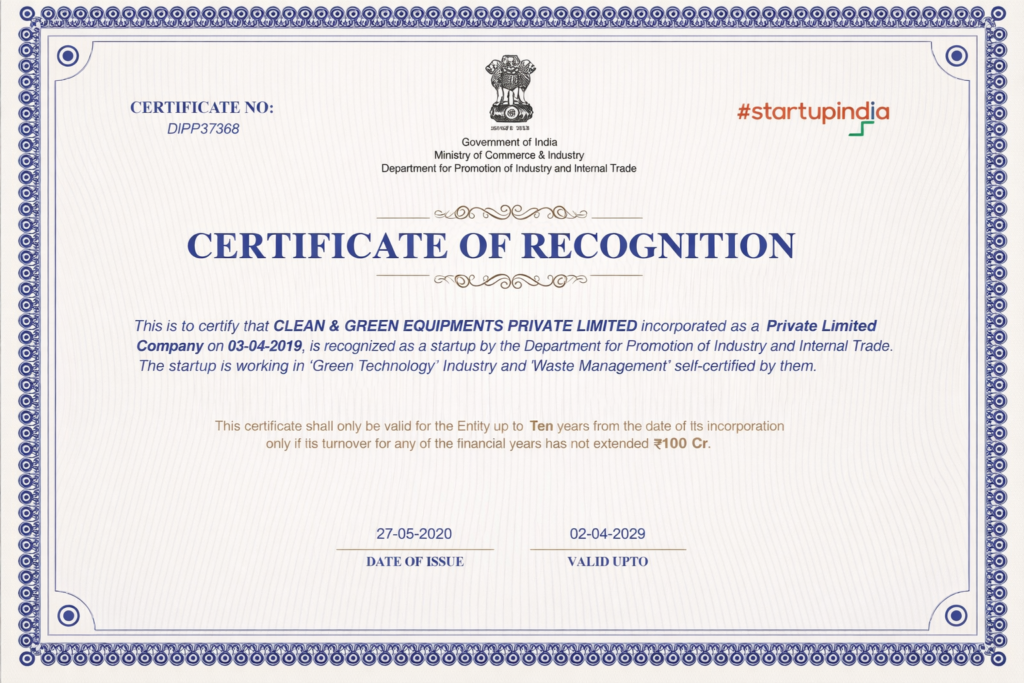
Startup India Recognition Certificate – Sample
After successful approval, the DPIIT issues the Startup India Recognition Certificate, which serves as official proof of startup status. This certificate is required to apply for tax benefits, funding schemes, and other incentives.
Why Choose Bharat e-Filing for Startup India Registration?
Bharat e-Filing offers end-to-end Startup India Registration services with a focus on accuracy, transparency, and legal compliance. Our experts help draft business descriptions, prepare documents, and handle the complete application process.
With personalised support, timely updates, and clear guidance, Bharat e-Filing ensures stress-free and successful registration.
Conclusion
Startup India Registration is a powerful step for startups looking to grow with government support and legal recognition. With proper documentation and expert assistance, the process becomes simple and efficient.
FAQs
Is Startup India Registration mandatory for startups?
No, but it is highly recommended to access government benefits.
Does Startup India Registration give tax exemption automatically?
No, tax benefits require separate application and approval.
Can existing businesses apply for Startup India Registration?
Yes, if they meet eligibility conditions.
Is there any registration fee?
Government fees are minimal; professional charges may apply.
How long does the recognition remain valid?
Recognition remains valid as long as eligibility conditions are met.